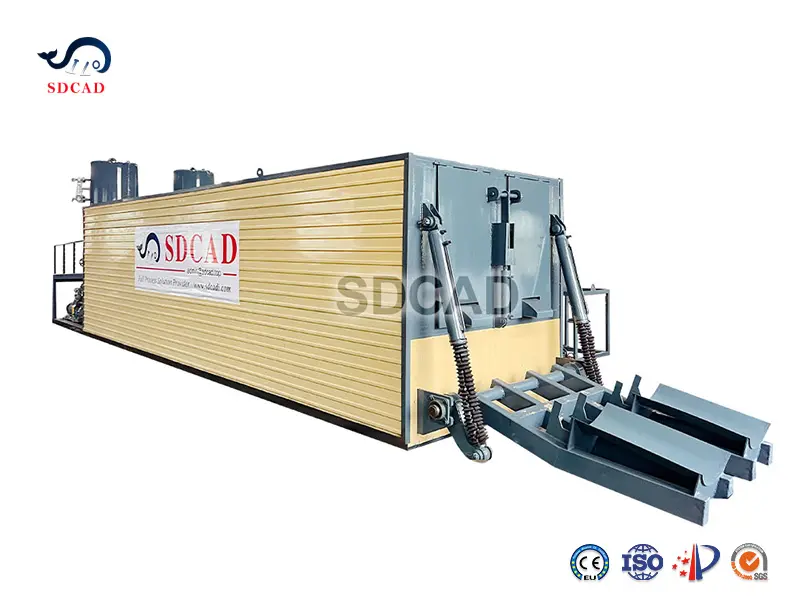
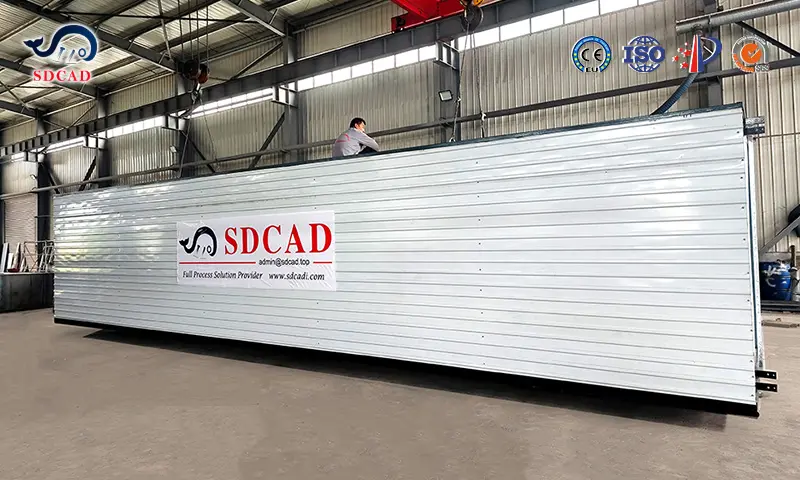
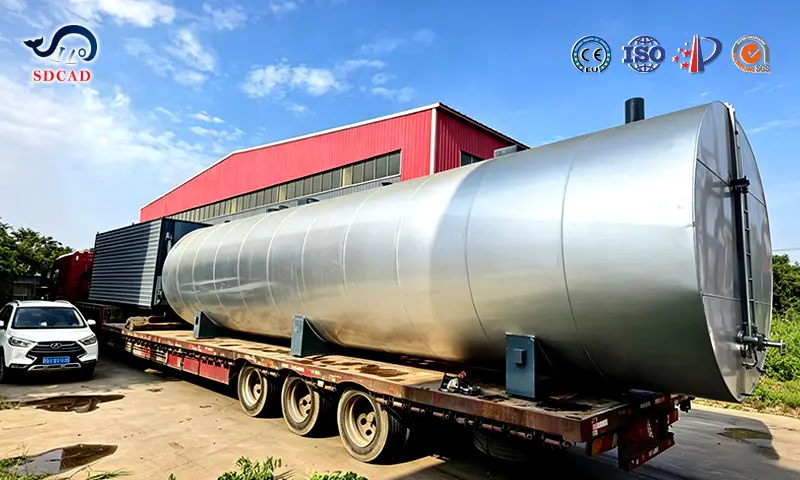
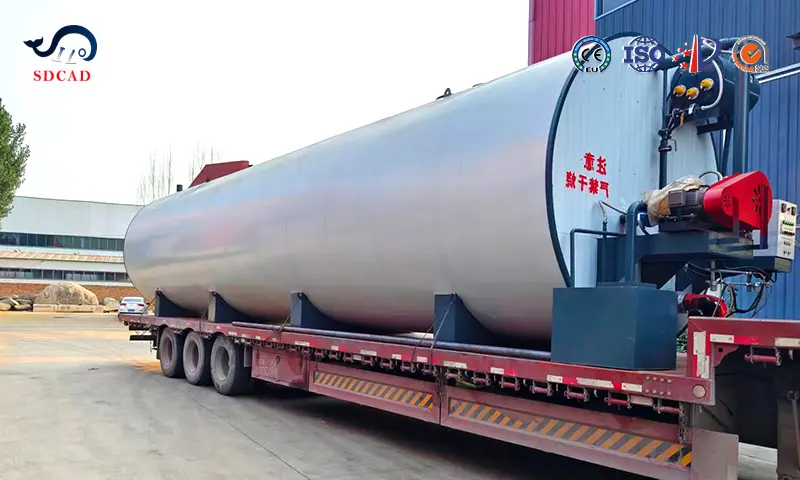
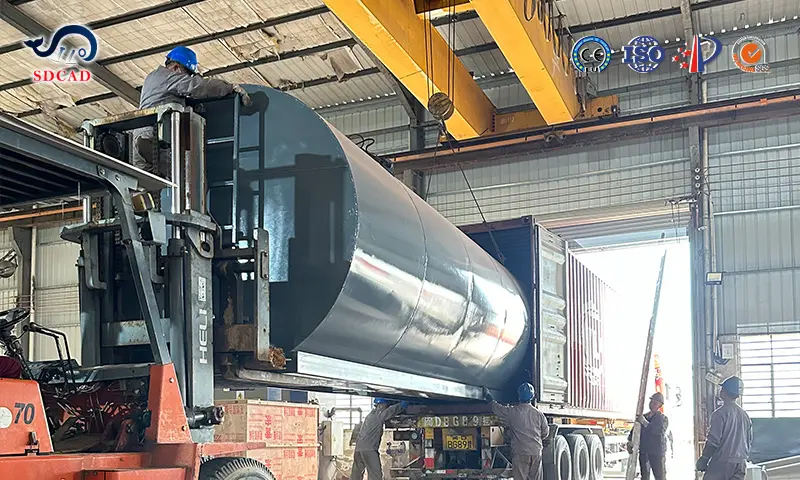
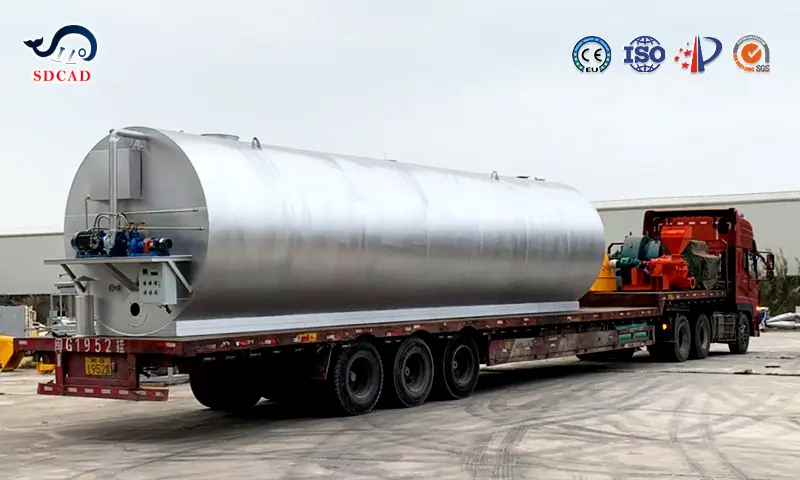
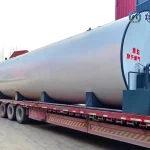
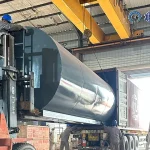
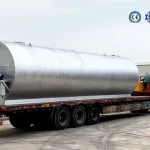
The high-efficiency energy-saving asphalt heating tank consists of a heater, asphalt temperature indicator, heat-conducting oil heating system, steam generator, pipelines, asphalt preheating system, pressure reducing system, tank cleaning system, and oil unloading & feeding device (optional).
This product features the following advantages:
1. High thermal efficiency and fast asphalt output.
This tank adopts direct heating: the burner heats the boiler, transferring heat directly to the asphalt, which rapidly raises the temperature of asphalt in the high-temperature zone. Once the asphalt reaches the required temperature, start the asphalt pump to discharge the material. Since heating is concentrated on asphalt in the high-temperature zone, it reaches the target temperature in a very short time (tests show only 30-45 minutes from start of heating to asphalt output).
2. Low fuel consumption and high efficiency.
The asphalt heating tank uses an energy-saving fuel-fired heating boiler (requiring only 8-10 kg of diesel oil to liquefy 1 ton of asphalt). It features a “tank-in-tank” heating design, which only locally heats the asphalt as needed. By heating only the required amount of asphalt, the operation time is greatly shortened, fuel consumption is reduced, and high-efficiency energy saving is achieved.
3. Integrated dehydration and tank cleaning functions.
When the asphalt contains water and needs dehydration, open the dehydration gate and the top cover of the main tank, then start the internal circulation to repeatedly circulate the asphalt inside the tank. The dehydration process is completed in several hours. When the project is finished or the tank needs to be relocated, all asphalt in the tank must be thoroughly cleaned. At this point, close the suction valve of the inner tank and open the drain valve of the main tank to completely empty all asphalt from the tank.
4. Multi-purpose design.
This tank is compatible with asphalt mixing plants and can also be used for asphalt storage, heating, and transit. Simply connect the pipeline system with relevant components according to the user’s specific requirements.