Model: HZS25 ~ HZS240
Capacity: 25~ 240 m³/h
Discharge Size :500~4000L
⚒️ISO, CE, EAC ⚒️12-month Warranty ⚒️7*24H Response

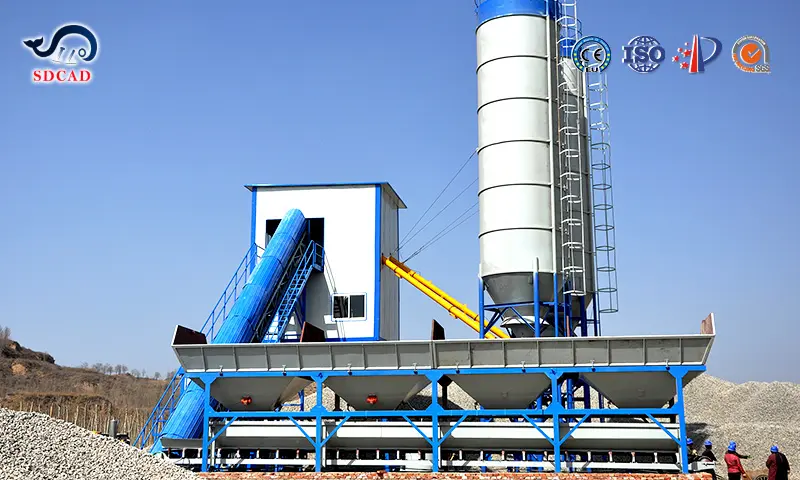
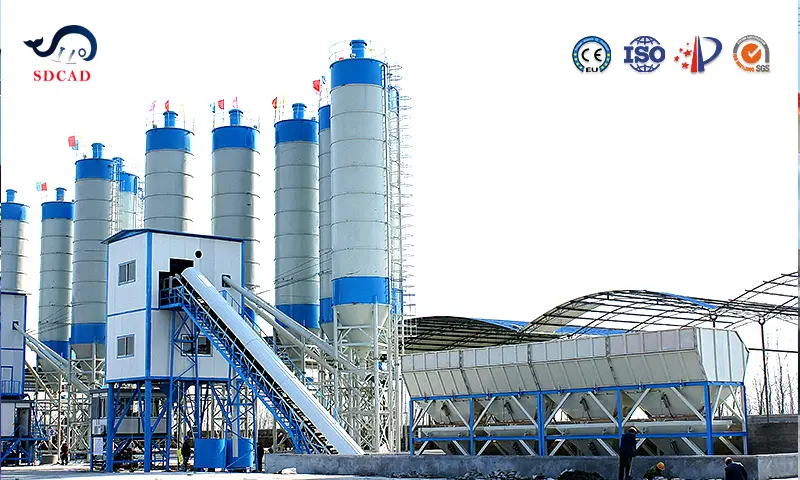
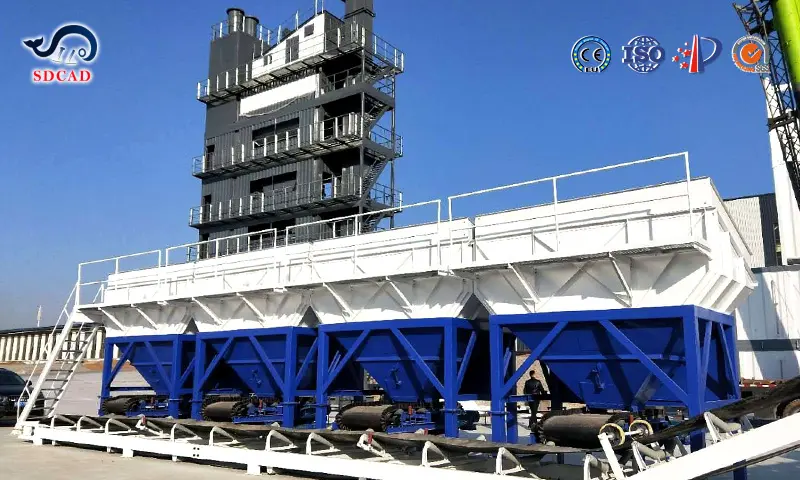
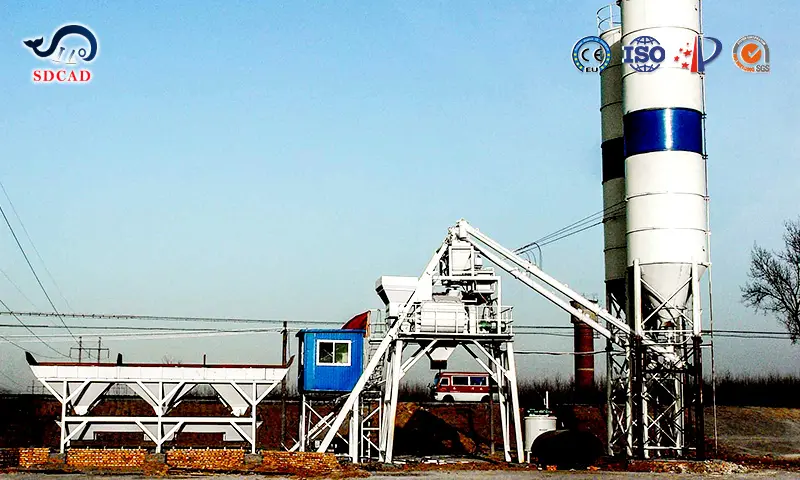
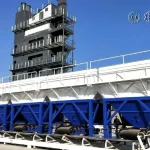
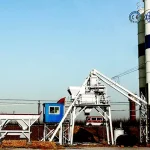

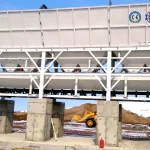
1. Classification by Production Capacity
(1) Small Stationary Concrete Batching Plants: Production capacity is 25-50 cubic meters per hour. The equipment is of moderate size and has a low investment cost, suitable for small-scale civil buildings, rural construction, small road projects, etc. The production scale is small, the operation cycle is short, and no large-scale site investment is required.
(2) Medium-sized Stationary Concrete Batching Plants: Production capacity is 60-120 cubic meters per hour. This is currently the most widely used type, suitable for residential communities, urban roads, medium-sized bridges, etc. It balances production efficiency and investment cost-effectiveness, can achieve continuous production, and meets the normalized concrete needs of medium-sized projects.
(3) Large-scale stationary concrete batching plants: These plants have a production capacity of 150-300 cubic meters per hour or more. They feature complex structures, a high degree of automation, and advanced control systems and environmental protection devices. Suitable for key projects such as high-speed rail, large hydropower stations, cross-sea bridges, and urban rail transit, they require large-scale site installation and are suitable for long-term, high-intensity continuous production.
2. Classification by Mixing Method
(1) Forced-mix stationary concrete batching plants: These plants utilize a forced-mixing host. The high-speed rotation of the mixing blades forces the sand, cement, water, and admixtures to mix evenly. They offer high mixing efficiency and produce uniform concrete quality, making them suitable for most engineering scenarios and the mainstream type currently on the market.
(2) Gravity-fall stationary concrete batching plants: These plants rely on the gravity of the materials to achieve mixing. The mixing speed is slower, the efficiency is lower, and the uniformity of the concrete is relatively poor. They are only suitable for small projects with low requirements for concrete quality, such as rural roads and temporary facility pouring. Their application scope is gradually shrinking.
3. Classification by Structural Form
(1) Single-Station Fixed Concrete Batching Plant: All equipment components (mixing host, batching machine, cement silo, screw conveyor, etc.) are integrated and installed on a single foundation platform. It has a compact structure, small footprint, and convenient installation, making it suitable for small and medium-sized projects with limited space.
(2) Dual-Station Fixed Concrete Batching Plant: Composed of two independent mixing systems, it can simultaneously produce concrete with different proportions and strengths, doubling production efficiency. It is suitable for large-scale projects requiring multiple specifications of concrete simultaneously, such as large industrial parks and key transportation projects.
A stationary concrete batching plant is a complete set of equipment. All components work together to ensure smooth, efficient, and high-quality concrete production. The core components include eight modules, each with an irreplaceable role, as follows:
1. Mixing Unit
The mixing unit is the core component of the stationary concrete batching plant, equivalent to its “heart.” It is responsible for mixing raw materials such as aggregates, cement, fly ash, water, and admixtures according to a preset ratio to form homogeneous concrete. Based on the mixing method, it can be divided into forced-flow and gravity-flow types. Currently, the mainstream is the forced-flow mixing unit, equipped with wear-resistant liners and high-efficiency mixing blades, capable of withstanding long-term high-intensity mixing operations, and also has overload protection to prevent equipment damage.
2. Batching Machine
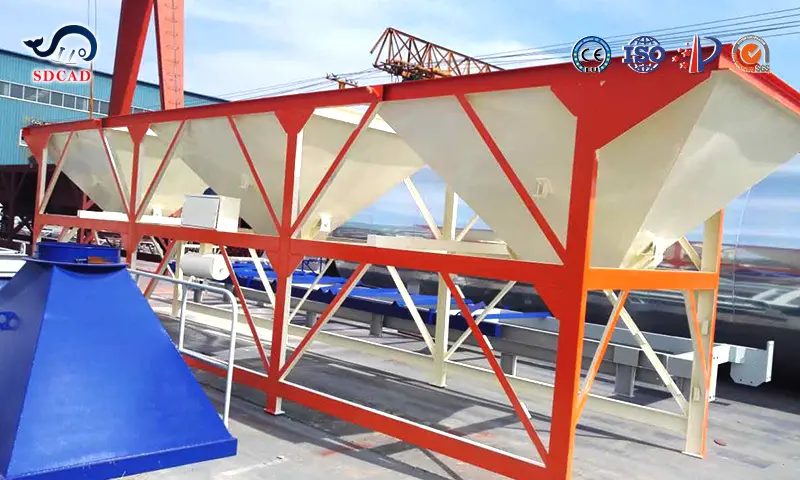
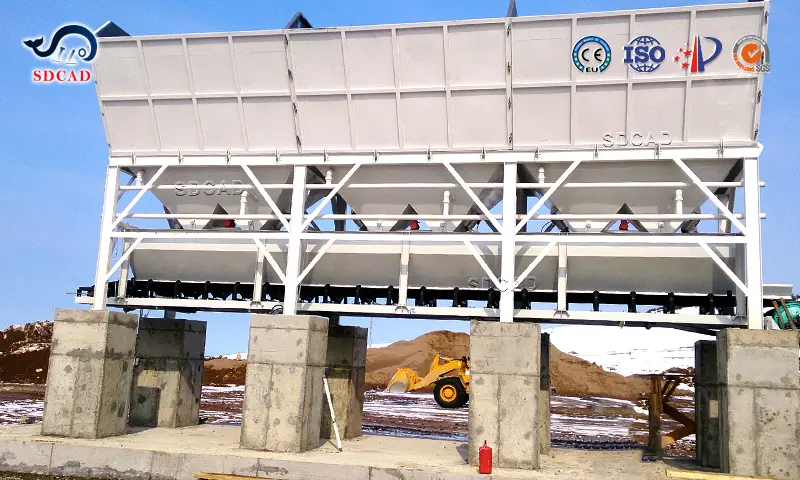
The batching machine is a key component for controlling the accuracy of concrete mix proportions. It is mainly used for the precise measurement and transportation of aggregates (gravel and sand). Typically, batching machines are divided into two-, three-, and four-compartment units. They can mix aggregates of different specifications according to project requirements. Equipped with electronic metering sensors and an automatic control system, they can precisely control the amount of each aggregate added, keeping the error within a reasonable range. This ensures the concrete mix meets design requirements and directly affects the strength and quality of the concrete.
3. Cement Silos and Fly Ash Silos
Both are raw material storage devices used to store powdery raw materials such as cement and fly ash separately, preventing moisture absorption and clumping. They usually adopt a cylindrical sealed structure and are equipped with level gauges to display the raw material storage level in real time, facilitating timely replenishment by operators. They are also equipped with dust removal devices to reduce dust leakage during the loading and unloading of powdery raw materials, balancing environmental protection and equipment protection. A screw conveyor is connected to the bottom of the silo for automatic material transport.
4. Screw Conveyor
The screw conveyor is mainly used to uniformly and stably transport powdery raw materials from cement and fly ash silos to the mixing unit, serving as the “transportation channel” for powdery raw materials.
The system is divided into horizontal and inclined screw conveyors, which can be flexibly combined according to the equipment layout. It adopts a sealed design to prevent dust leakage and environmental pollution, while also featuring stable conveying and no residue, ensuring accurate raw material delivery and avoiding waste.
5. Water and Admixture System
This system consists of a water tank, admixture tank, metering pump, and pipelines, responsible for the storage, metering, and delivery of water and admixtures. The water tank is equipped with a level gauge to display the water level in real time; the admixture tank stores different types of concrete admixtures (such as water-reducing agents and retarders) and is equipped with a mixing device to prevent admixture sedimentation; the metering pump can accurately control the dosage of water and admixtures, ensuring that the workability of the concrete, such as fluidity and setting time, meets engineering requirements.
6. Control System
The control system is the “brain” of the stationary concrete mixing plant. It adopts a PLC automatic control system to realize the automated operation of the entire production process, including the full control of raw material metering, conveying, mixing, and discharging. Operators can set production parameters (mixing ratio, mixing time, discharge rate) via touchscreen, monitor the production process in real time, and view equipment operating status. It also features fault alarm functions to promptly detect and handle equipment malfunctions, reducing production interruptions. Some large equipment can be remotely monitored and operated.
7. Discharge System
The discharge system mainly consists of a discharge hopper and conveying pipes or belt conveyors, responsible for transporting the uniformly mixed concrete to concrete trucks or directly to the pouring site.
The discharge hopper is equipped with wear-resistant liners to prevent concrete adhesion and wear. The conveying method can be selected according to site and project requirements. Belt conveyors are suitable for long-distance transport, while pipe conveying is suitable for short-distance, precision pouring scenarios, ensuring smooth concrete discharge without residue.
8. Auxiliary Equipment
Auxiliary equipment includes dust removal equipment, lubrication systems, drainage systems, and maintenance platforms. It is an important component to ensure normal equipment operation, extend service life, guarantee environmental compliance, and ensure operational safety. Dust removal equipment is used to handle dust generated during the production process, meeting environmental protection requirements; the lubrication system regularly adds lubricating oil to the moving parts of the equipment to reduce wear; the maintenance platform facilitates daily inspection and maintenance by operators, ensuring operational safety.