| Model |
M-16 |
M-24 |
M-36 |
M-48 |
M-56 |
M-64 |
| Filtration area m2 |
10 |
15 |
24 |
30 |
40 |
50 |
| Filter qty( unit) |
16 |
24 |
36 |
48 |
56 |
64 |
| Height of filter m |
1.5 |
1.5 |
1.5 |
1.5 |
1.5 |
1.5 |
| Array |
4*4 |
4*6 |
6*6 |
6*8 |
7*8 |
8*8 |
| Wind capacity m³/h |
1000-1500 |
1500-2500 |
2500-3500 |
3500-4500 |
4500-5500 |
5500-6500 |
| Fan power KW |
1.5 |
1.5 |
2.2 |
3 |
4 |
5.5 |
Main Types of Industrial Dust Collectors
The classification of industrial dust collectors revolves around four main dimensions: filtration method, dust cleaning method, structural form, and applicable scenarios. All types adhere to the core principles of high-efficiency filtration, stable dust removal, safe operation and environmental compliance. Their internal structure and accessory configuration are professionally optimized purely according to dust properties, actual production demands and required air handling capacity. Below are the mainstream categories and respective features, which clearly define applicable working conditions to help customers select ideal models quickly and support efficient procurement decisions:
1. Classification by Filtration Method (Most Commonly Used Classification)
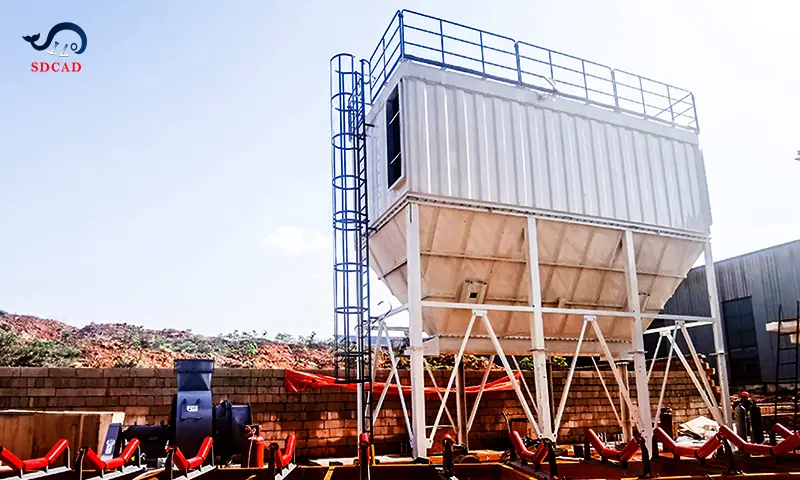
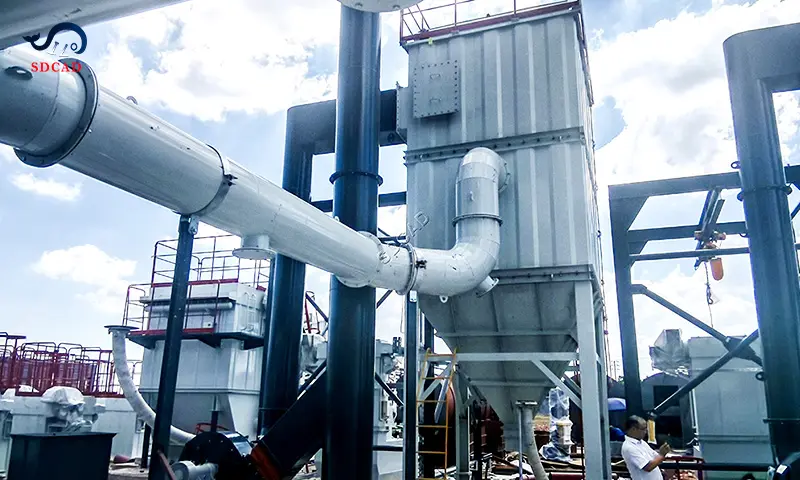
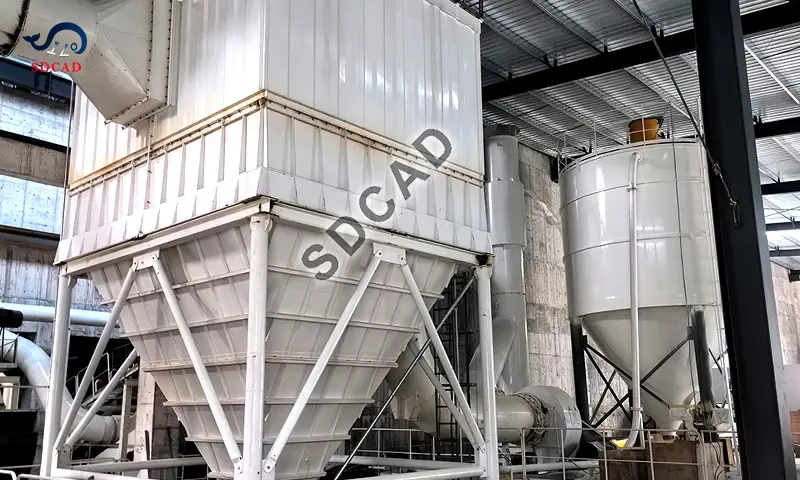
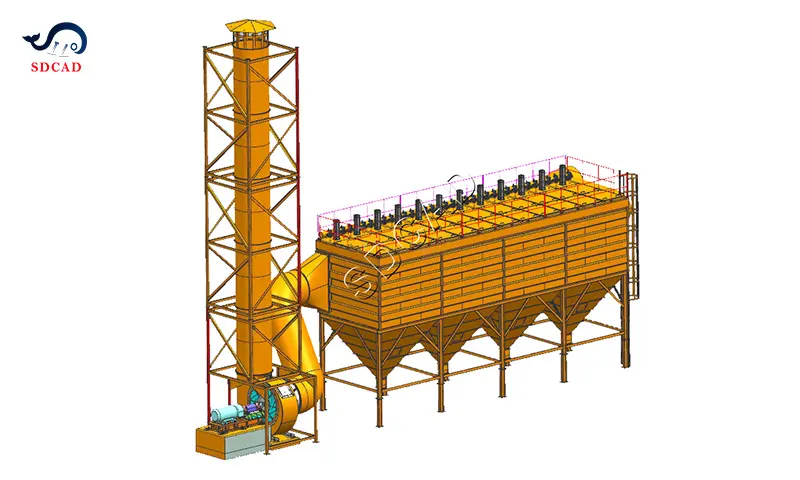
Baghouse Dust Collector
It is the most popular and widely applied type, adopting filter bags as the core filtering medium. When dusty flue gas passes through filter bags, dust particles are intercepted on the bag surface while purified clean air is discharged smoothly.
This device can handle both fine powder and coarse granular dust with high filtering precision, capable of trapping particles above 0.1μm. It features large air volume and adapts to medium and high dust concentration environments ranging from 100 to 10000mg/m³, widely used in mining, cement and chemical industries. It is available in pulse jet and reverse airflow cleaning styles, with simple overall structure and easy daily maintenance, becoming the top choice for most conventional industrial dust removal projects.
Cartridge Dust Collector
Filter cartridges serve as the filtering medium here. The folded cartridge design provides larger filtering area within compact space. It achieves ultra-high filtration accuracy for particles over 0.01μm, perfectly matching fine dust treatment with dust concentration between 50 and 5000mg/m³, such as mechanical processing, pharmaceutical manufacturing and new energy industries. It delivers thorough dust cleaning with low operation resistance and outstanding energy-saving performance, and only occupies 1/3 to 1/2 floor space compared with bag dust collectors. It is ideal for factories with limited installation space, yet not applicable for high-humidity and sticky dust that may easily cause cartridge blockage.
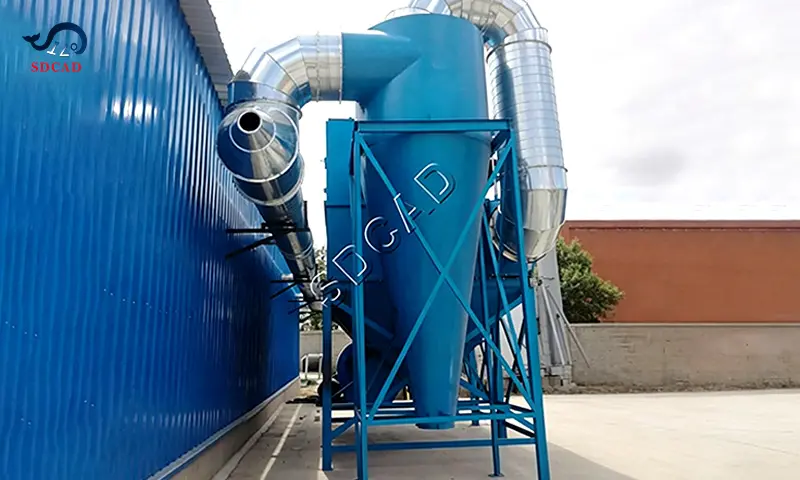
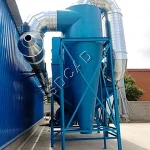
Cyclone Dust Collector
Without any consumable filter media, it separates dust from air relying on strong centrifugal force. Inhaled dusty air forms high-speed rotating airflow inside the device, throwing heavy dust particles onto the inner wall to fall into the ash hopper, and clean air flows out from the central channel. It is mainly used to remove coarse dust particles above 10μm and serves as pre-treatment equipment for super high-concentration dust gas over 10000mg/m³, commonly seen in mine crushing sites and gravel yards. It can work in tandem with bag and cartridge dust collectors for graded dust removal. It owns simple structure, low cost and zero vulnerable parts, but its filtering precision is relatively low, not fit for fine dust purification.
Electrostatic Precipitator
It applies high-voltage electrostatic field to charge suspended dust particles, and the charged dust will be firmly adsorbed by polar plates so as to realize gas-solid separation. It can filter tiny particles above 0.01μm with huge processing air volume, stably operating under high-temperature, high-humidity and high-dust-concentration working conditions with ambient temperature up to 200-800℃, perfectly suited for flue gas purification of power plant boilers and steel plant sintering production lines. It has the advantages of low wind resistance, power saving and long-term stable running. Nevertheless, it comes with complicated structure, high purchase cost and expensive maintenance fees, and has strict requirements on dust resistivity, mostly deployed for large-scale centralized dust treatment in heavy industrial enterprises.
2. Classification by Cleaning Method
Pulse Jet Dust Collector
It is the most mainstream cleaning solution. High-pressure compressed air is instantly sprayed out via pulse valves to impact filter bags or cartridges. The instantaneous air impact and reverse airflow blow off accumulated dust thoroughly from filter surfaces. It supports online ash cleaning without shutting down production lines, perfectly matching continuous mass production in chemical, mechanical processing and food industries. Users can flexibly adjust pulse blowing frequency to cope with varying dust concentrations, which has become the standard cleaning configuration for both bag and cartridge dust collectors.
Reverse Air Dust Collector
Dust removal is realized by feeding reverse airflow opposite to original air intake direction to scour filter bags. This cleaning mode causes minor abrasion to filter materials with stable cleaning effect, suitable for scenarios adopting fragile filter media and low-viscosity dust, such as fine dust purification in food and pharmaceutical factories. Most models need offline shutdown for cleaning while partial upgraded versions support online operation. Its cleaning efficiency is slightly inferior to pulse jet type, but it features simpler structure and lower later maintenance expenses.
Shaker Dust Collector
Equipped with vibration motors, it drives filter bags and cartridges to generate regular vibration, shaking off surface dust into the ash hopper by inertia force. This cleaning way requires no compressed air supply with low use threshold, applicable for small-scale production sites with low dust concentration including small woodworking workshops and miniature feed mills. It is cheap and easy to install, yet its cleaning effect is incomplete and filter blockage occurs easily, so it cannot be used in medium-to-high concentration and fine dust working environments.
3. Classification by Structural Form
Vertical Industrial Dust Collector
As the mainstream structural design, it is vertically arranged with ash hopper at the bottom, air inlet on the lower half and air outlet on the top. It occupies little floor space and can be flexibly placed in various ordinary industrial workshops and narrow operation areas. It can be directly installed beside dust-generating equipment such as machine tools and crushers for on-site dust collection, which is highly flexible and favored by small and medium-sized enterprises.
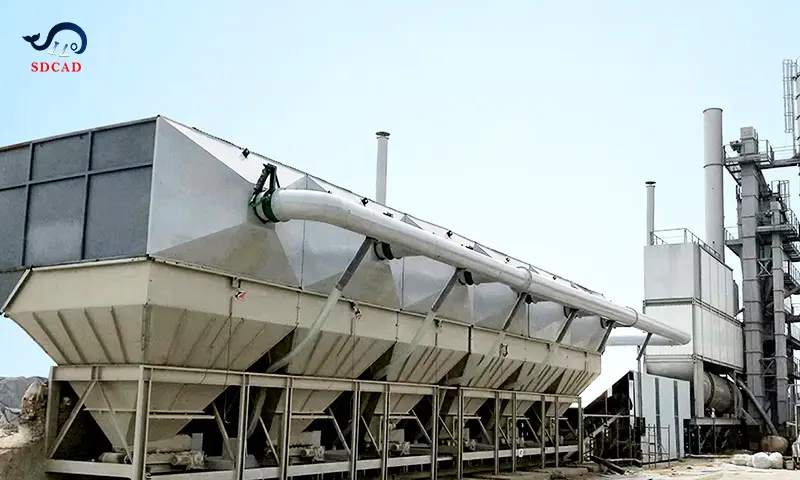
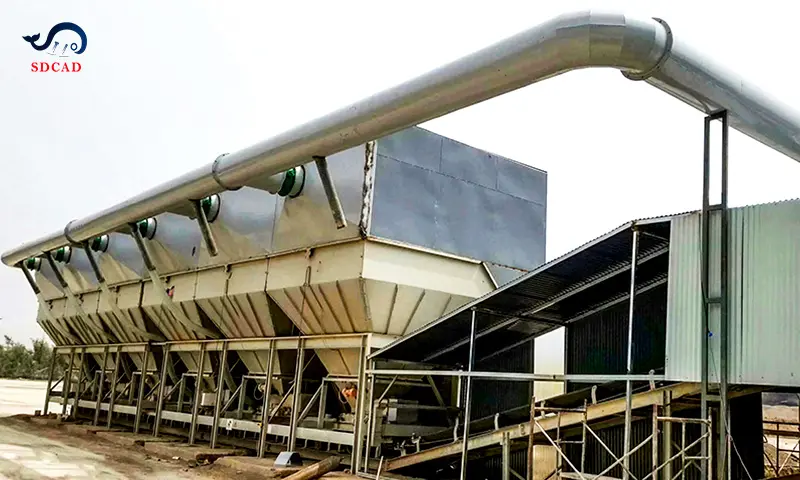
Horizontal Industrial Dust Collector
All filter bags and cartridges are arranged horizontally with ash hoppers installed at bottom or side positions. It is designed with large overall processing capacity, specially customized for large industrial plants and severe high-dust-concentration environments like large mines and power stations. However, it requires sufficient dedicated installation area. Multiple filter groups can be combined freely to boost overall dust removal efficiency, meeting the demands of long-time uninterrupted large-capacity production.
Portable Industrial Dust Collector
Featured with compact body and universal moving wheels, it can be freely shifted to different dust emission positions. It is widely used for scattered dust control in small machining workshops, laboratory environments and temporary production stations. Though its single-unit processing capacity is limited, it is competent for low-concentration dispersed dust purification. It needs no fixed installation and delivers outstanding mobility, fully satisfying temporary and decentralized production dust removal demands of small factories.
4. Classification by Protection & Adaptability
Explosion-proof Industrial Dust Collector
This series passes professional explosion-proof certification, fitted with explosion-proof motors, pressure relief devices and anti-static filter materials. It is specially developed for flammable and explosive dust working conditions including wood dust, metal powder and chemical combustible dust, effectively eliminating explosion risks triggered by static accumulation and dust concentration, widely applied in wood processing, metal polishing and fine chemical industries.
High-temperature Industrial Dust Collector
It is equipped with high-temperature resistant filter materials such as fluorine bags and ceramic filter cartridges as well as heat-resistant sealing accessories, capable of stably treating high-temperature dusty flue gas within 200℃ to 800℃. It is commonly used for flue gas dust removal in power plants, steel metallurgy workshops and high-temperature chemical production lines, preventing equipment deformation and filter material damage under extreme heat to guarantee long-term stable operation.
Corrosion-resistant Industrial Dust Collector
Key components including valve assemblies, filter elements and sealing parts are made of anti-corrosion raw materials like 316 stainless steel, anti-rust coating and PTFE filter media. It can resist erosion from corrosive dust and acidic-alkaline mixed airflow, effectively avoiding equipment aging and damage, extending overall service life and maintaining lasting stable filtration efficiency. It is widely applied in fine chemical production, salt-alkali related workshops and other harsh corrosive industrial environments.